Founding reservations are open. $495 with a $50 refundable deposit. Reserve yours

Technology

The axis is the whole invention.

Balance training equipment has looked more or less the same for forty years. A curved base, a flat top, and a pivot that sits on the floor. PIVOT changes one thing about that arrangement, and changing it changes what the equipment can teach.

Conventional board translating under load
Product render

The problem

The dead zone.

When the pivot sits on the floor, the board has to translate sideways before it can tilt. During that translation your foot is being carried somewhere without being asked to do anything about it.

By the time the surface starts to tilt, your center of mass has already left the base of support. The correction that follows has to come from the hip and the trunk, because the ankle no longer has the leverage to do the job.

The result is that the user gets very good at the compensation and no better at the skill.

  • Translation before rotation

    The board moves laterally first, which is the opposite of how the ankle works.

  • Late signal

    Proprioceptive feedback arrives after the correction window has already closed.

  • Hip-dominant correction

    The strategy trained is the one people already over-rely on.
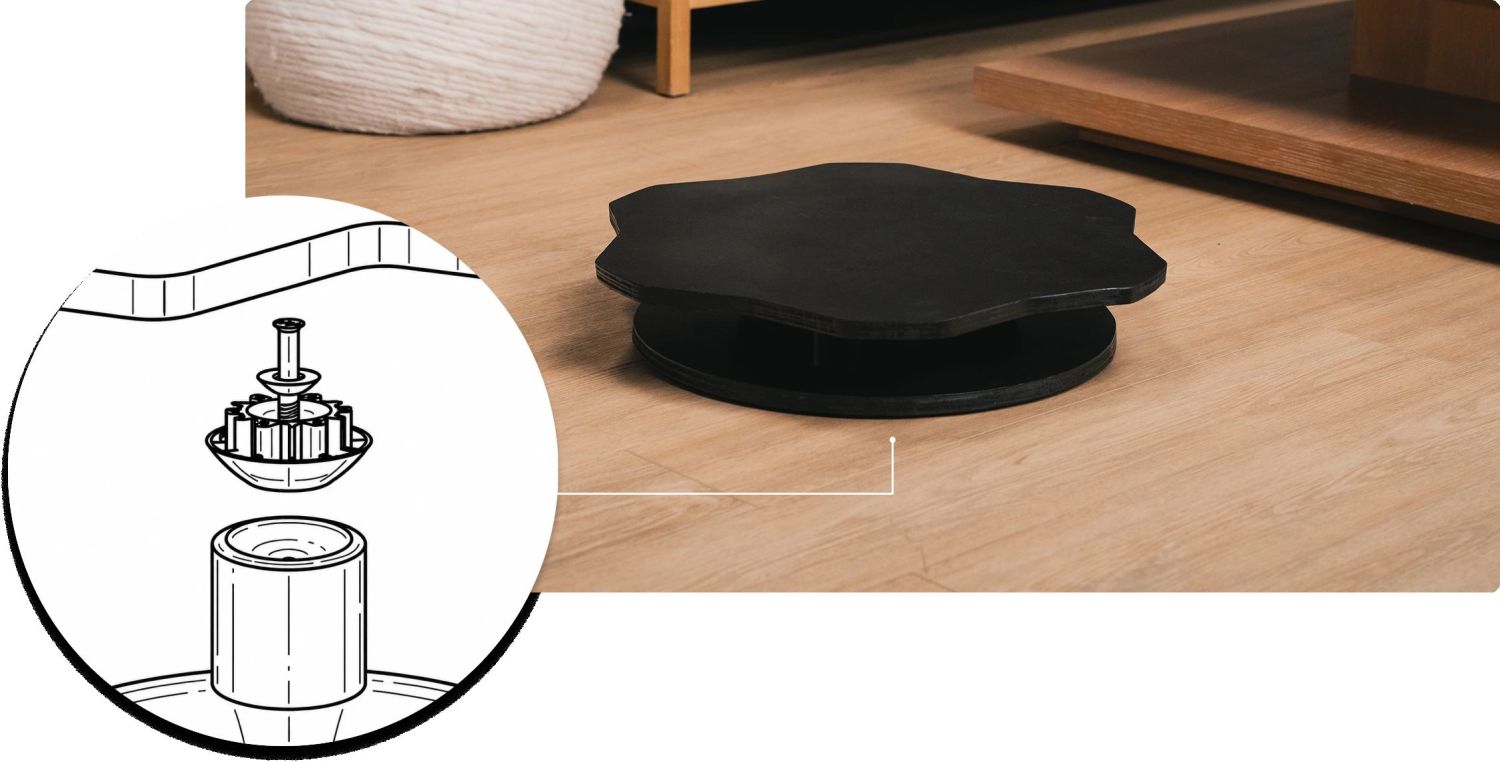
PIVOT cross-section showing the fixed axis
Product render

The mechanism

Axis at the surface.

PIVOT holds the axis of rotation at the foot bed. The platform rotates around a fixed mechanical joint with no lateral travel and no slop in the linkage, so the surface responds the instant it is loaded.

Your ankle rotates around a fixed axis. The board now does the same thing, which is what makes the correction an ankle correction.

  • Fixed-axis joint

    The axis does not move. The platform cannot slide out from under the user.

  • Indexed tilt stops

    Range is bounded mechanically rather than by the user running out of room.

  • Immediate mechanical response

    The surface answers on load, so the signal arrives inside the correction window.

Adjustable difficulty

Ten levels. One button.

An integrated air compressor sets platform firmness from the app or from the control on the unit. Choose a level and the pressure adjusts in seconds. Someone starting seated and a college midfielder use the same board at different settings.

Higher pressure / steadierLower pressure / harder

Levels 1 to 3

Rigid Foundation

High pressure holds the platform firm and keeps the range of motion small. This is where you build base stability, and where most people start. You can work these levels seated.

Levels 4 to 7

Compliant Resistance

Medium pressure lets the platform move under load and answer back. The range opens up and the corrections get faster. This is the working range for most training once the basics are steady.

Levels 8 to 10

Unlocked Acuity

Low pressure makes the surface fluid and highly reactive. Built for trained athletes working on rate of force development and fast single-leg control.

The direction surprises most people. Firmer is steadier. Softer is harder. Level one is the easiest setting on the board, and level ten is the one that will put you on the floor.

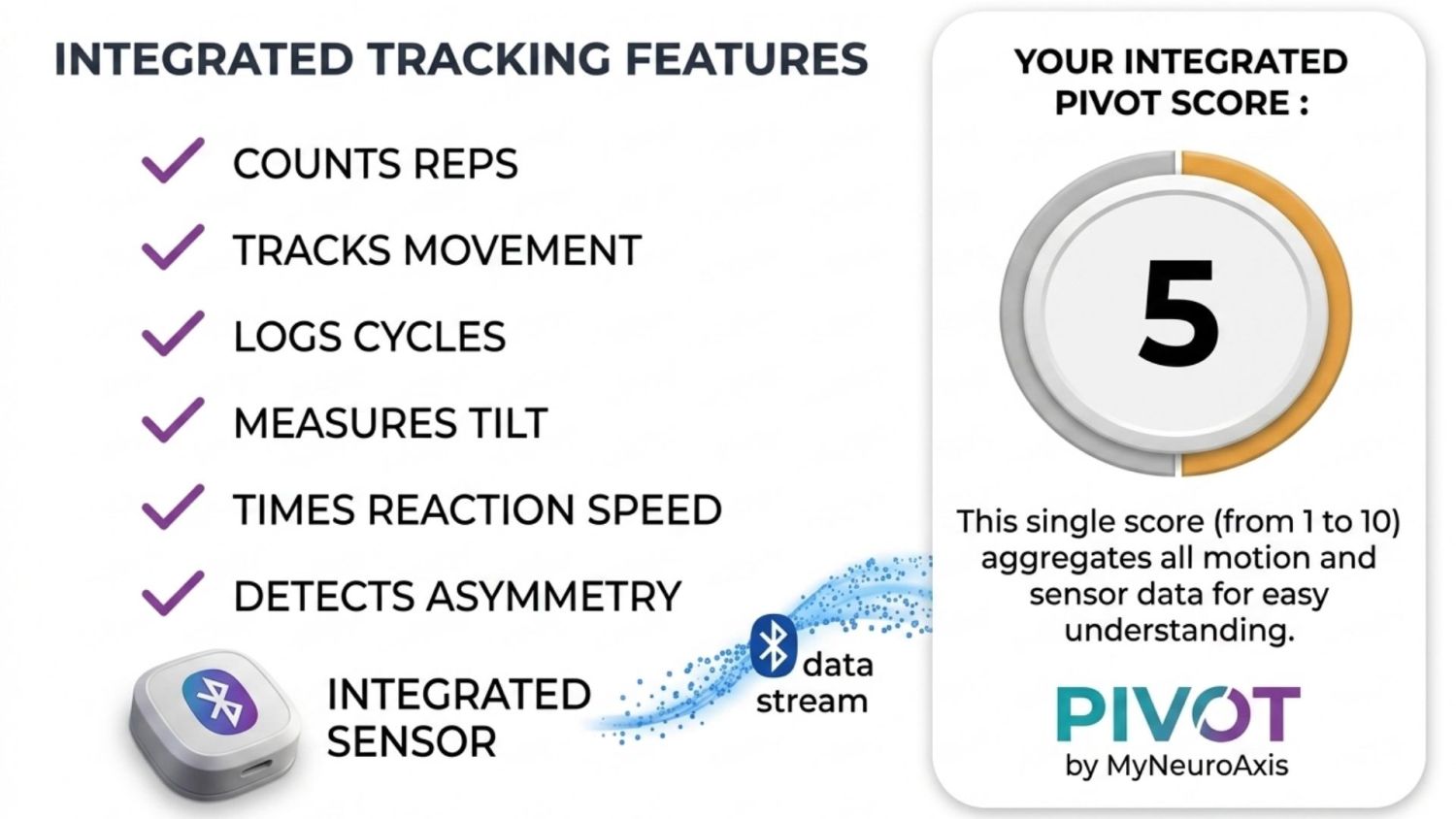
Stability score in the companion app
App design in development

Measurement

What the sensor sees.

An embedded sensor samples acceleration and angular velocity at 800 samples per second and streams over Bluetooth to the companion app. Tilt range, recovery time, and left-right loading are reduced to a single stability score from one to ten, stored session over session.

  • Tilt

    Degrees of platform movement and time held at range.

  • Recovery

    Time from displacement back to level.

  • Symmetry

    Distribution of load between left and right across a session.

The sensor and app are in final development with our engineering partner. Founding reservations fund that work. We will show the integrated unit running before we ask anyone to pay a balance.

Protection

Four granted patents.

The fixed-axis mechanism is covered by US Patents 11,701,550 and 11,331,539 along with two further granted claims, protected through 2040. The patents cover the arrangement itself, not a particular product built around it.

Comparable mechanisms exist in clinical systems that weigh up to 235 pounds, require a trained operator, and start around $14,000. PIVOT is the first portable, self-directed platform to deliver the mechanism for under $1,000.

Founding reservation

Founding price, $495.

A $50 deposit holds your price and your place in the first production run. It is fully refundable at any time before shipping, no questions asked.

$495$899

Founding price / retail

Reserve with a $50 deposit
  • $50 today. Your deposit applies to the full price.
  • When your unit is ready to ship we email you to complete the remaining $445.
  • You are never charged the balance without confirming.
  • Refundable in full at any time before shipping.

We are not giving a ship date yet. The integrated unit is still in build with our engineering partner, and a date we cannot stand behind is worth nothing to you. Your deposit holds your price and your place in line, it is refundable in full at any time, and we will not ask for the balance until we can show you a finished unit and a real date.